A common question is how do I get started in dog agility? And to be honest – most people really don’t like the answer.
When we think of dog agility, most people think about obstacles – they picture a dog flying over a jump, weaving between poles, and shooting out of a tunnel. This ultimately isn’t what agility is about – nor is it how effective training begins.

We think about agility being 14-20 obstacles you take in a particular order – and while that’s true, it isn’t about the obstacles, it’s about a line between them. Our job in agility as a handler is getting our dog to run a line that has all the obstacles along it. The closer that line is to the middle point of each obstacle, the better. The dog must perform the obstacles along that line – but the line matters more than the obstacles. (More on that later – for now I want to get back to getting started!)
When people get started in agility with their dogs – they are usually VERY excited to see their dog doing the obstacles. It brings a lot of joy to see a dog figure something new out! It is exciting to see them go through a tunnel when they never had before. It is thrilling to see them climb up and across a dog-walk.

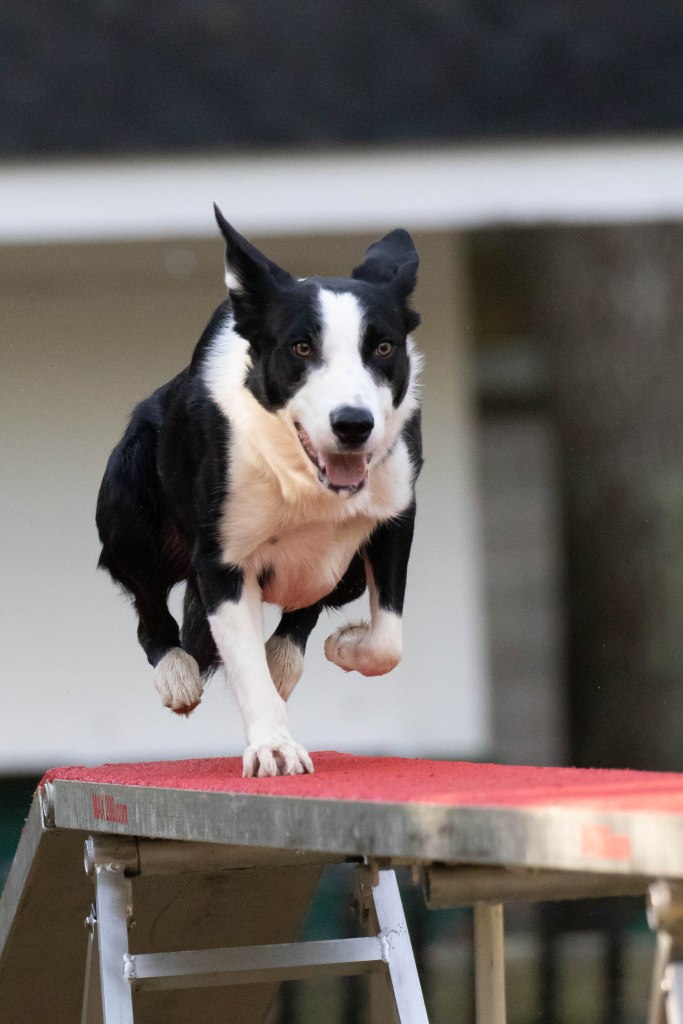
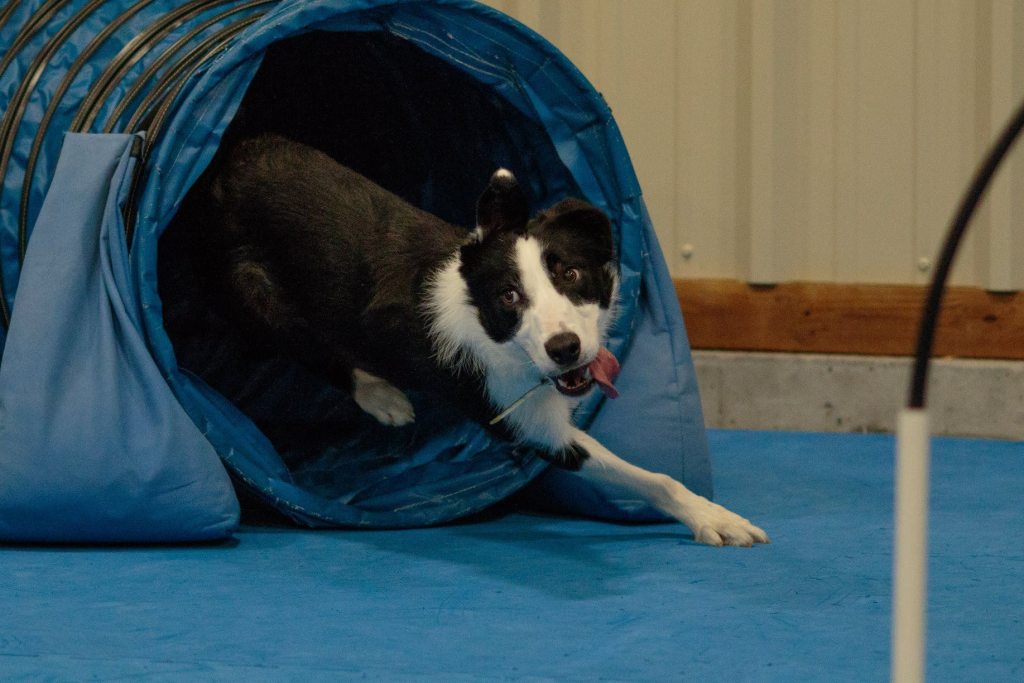
But to truly be successful in agility, many other training elements should take priority over doing obstacles: confidence, connection, drive, and relationship with your dog. Putting these elements first builds success so that when you begin to train obstacles you have a dog ready to take on the world and who understands that you are a team.
Many first agility classes look a little like this: A dog on leash the whole time because dogs weren’t expected to want to be with their handler. Dogs lured inch by inch across whole obstacles when they aren’t terribly confident: maybe through a dark tunnel, over a low jump on a slippery floor, across a rocky tippy board.
Dogs might turn into successful agility dogs in spite of this – my first dog didn’t start how I would start with a dog now and she got her Agility Championship in 2 years, she was ranked #1 in the country in jumpers in 2019, and she placed in the top 10 routinely. But while she did well, she was never as confident or fast as she had the potential to be. It took years for her to gain confidence on a teeter after she had a poor experience in beginner agility, it took years for her to open up and extend across big lines, she never wanted to work at distance, and I had to run every inch of the course for us to be competitive.

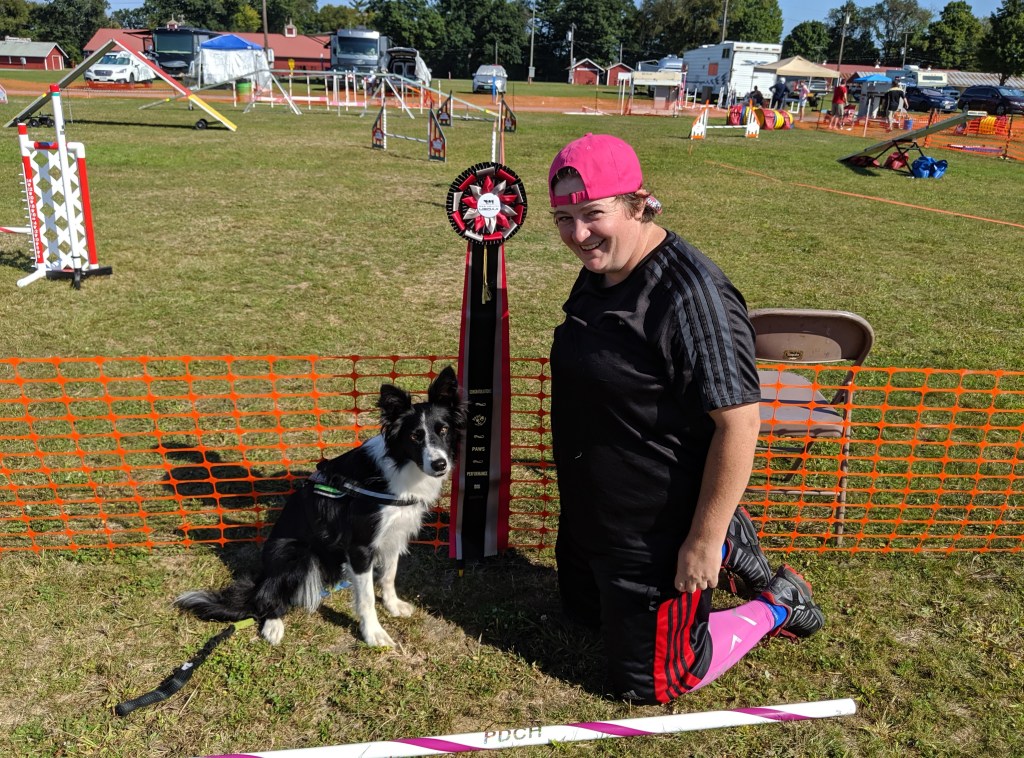
So back to the question – what does getting started in agility look like? It looks like lots of games to build your relationship with your dog, it looks like having a good recall, it looks like first building drive for a reward from your dog (toy or food – ideally both), it looks like lots of flatwork drills so your dog knows what line you are cuing. And then, when you begin obstacle work, it looks like the dog making choices, getting rewarded A LOT, and learning confidence and independence from day one.
So what might a first agility class look like? It might look like a dog be on a non-restrictive harness with a tab being restrained while you run away and turn your head and recall your dog to the side of your body that you are looking (and of course reward). It might look like learning the footwork for a front cross and doing that with your dog on the flat. It might look like sending your dog ahead to a reward on the ground while you turn away and as they come to you throwing another reward ahead of you. It might look like learning a game like “choose to jump” on a cone or jump wing.
Want advice on how to get started? More information on games to play so you’re ready for your first class? Contact us for ways to get going in dog agility!
 So Fly Agility Doggs
Leave a comment